Shaping A New Year’s Resolution
By Eric Kastan, M.A.,LMFT, BCBA
How can you reinforce a change in behaivor?
Well it’s that time of the year where you will hear a lot about New Year’s resolutions. We may look at our children and think about what changes in their behavior we’d like to see in 2014. In ABA, sometimes this change requires a new set of behaviors. To teach new behaviors in ABA, there are two great methods, shaping and chaining. I will look at shaping for this month.
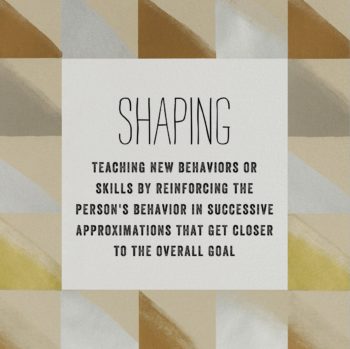
Shaping is a procedure that we all have experienced throughout our lives. From simple to complex behaviors, shaping was key: Language acquisition, learning how to dress, and a whole host of other behaviors we have acquired. Shaping is the idea of teaching new behaviors or skills by reinforcing the person’s behavior in successive approximations that get closer to the overall goal. To do this procedure, we first define the end goal of the behavior (how, when, what it looks like, etc.). Once we have the end goal stated, we model the first small piece of the behavior, and reinforce it when reproduced. Once this step is mastered, we no longer reinforce that step, and the reinforcement only comes when the person completes what they know already and another small step (successive approximation) towards the end goal. This continues until the person is able to complete the whole set of behaviors needed to meet the goal. When the whole set is accomplished, reinforcement is only given when the end goal is met, and can be faded out once mastered.
This procedure is simple with correct planning. Understanding how to break a behavior down is needed, and being able to see the successive approximation as they come. A classic example is teaching a child the word spaghetti (a word that is typically hard for children). You would say the word to model it. If the child uses the “sp” sound, then they get reinforced. Once the “sp” is mastered, the child would only get reinforced when they state the word closer to spaghetti, and so on, until the word is mastered. This can be done for dish washing, tying shoes, walking to set places, cleaning, and so on. To set up shaping one should have professional guidance. However, once the person who is doing the shaping learns the technique, then they can do it on their own. So in a sense, the shaper is also being shaped.