I’m Still Learning to Accept My Autism
Zoey Giesberg, MSW
I may have mentioned here before that I didn’t learn I was autistic until I was thirteen years old. In fact, looking back on the articles I’ve written for FACT, I did indeed write about it. But I want to come back to that topic to discuss something I sort of touched on in that piece – self-acceptance about being autistic.
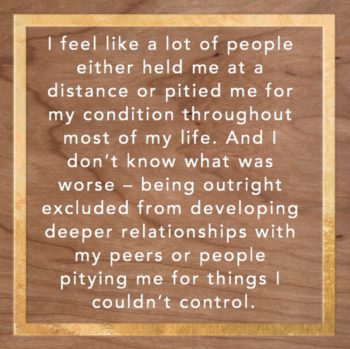
Accepting being autistic has not been easy for me. As I said many months ago, I spent a lot of my life trying to suppress it out of fear that people wouldn’t be understanding at best and judge me for it at worst. In spite of many people trying to emphasize my strengths, I saw my autistic traits as too debilitating that they ended up erasing the good things about me. I may be smart, driven, inquisitive, and kind, but I also had trouble socializing and had horrible meltdowns that rendered me incapable of reason or control over my actions. To this day I feel like a lot of people either held me at a distance or pitied me for my condition throughout most of my life. And I don’t know what was worse – being outright excluded from developing deeper relationships with my peers or people pitying me for things I couldn’t control.
For a long time I actively chose to distance myself from autism as much as I could. Therapists would constantly recommend I learn about Temple Grandin and my parents would try to push me to read their small collection of autism- and Aspergers-related books, but I refused it at every turn. Having grown up at a time when autism was not anywhere near a public issue, I couldn’t fathom how I’d relate to anything or anyone else who was autistic. Growing up in a neurotypical world may have helped me adjust to common social protocol, but it also left me precariously isolated from anyone who could’ve been like me.
In short, I felt alone and no one would ever understand me.
I mentioned in my first piece for FACT about how working with a kid on the autism may have turned me around into accepting my autism, but I wouldn’t have even been open to it if it weren’t for television. Despite my previous resistance to her, in 2010 I sat down and watched HBO’s biopic of Temple Grandin. I figured that while there couldn’t be any way I’d relate to it I might as well give it a shot. As I watched the biopic, a curious thing happened – I found I actually did relate to it. Scenes of Temple connecting various patterns and being overwhelmed by social and environmental stimuli hit close to home. I saw that the film didn’t demean her autism but showed it as a fact of her life. And most importantly, the film’s depiction of her “struggle” wasn’t so much of autism but rather people’s resistance to her innovations because she was a woman who thought outside the box in a male dominated field. It was clear that the filmmakers respected Temple in a way that not many do and wanted to do right by her. (Incidentally she and other autistic people were heavily involved in the making the movie, which is more than can be said about a lot of Hollywood productions involving mental health and disability.) So while Temple and I are not exactly identical, I did feel a little less alone.
But what really has made me feel less separate has been my newfound involvement in wider autism world. Helping facilitate the young adult group has exposed me to others like me and helped me form bonds with them in a way I haven’t with others. And I’m finding more and more articles, videos, and blogs made by autistic people that have helped validate my experience and views of the world. I’m beginning to find I’m not as alone as I’ve always thought I was. And there’s a lot of comfort in that.
According to Erik Erikson’ psychosocial development model, your teen years are when you start figuring out your identity and settling into it. Based on that, I’m still stuck trying to figure out my identity as an autistic person. But as time goes on and the more I learn about autism, the more I’m beginning to find comfort in it. And seeing others embrace the autistic identity gives me a sense of indirect pride in myself. I’ve got a long ways to go to fully embracing my autistic identity, but I know I’m getting there day by day.