Who takes care of me?
Eric Kastan, MA, LMFT, BCBA
This month, I am departing a little bit of the ABA path. Part of being able to effectively intervene, manage, and shape your child’s behavior, is making sure you are also taking care of yourself. This, as a caregiver, is often over looked especially as your child gets older. Caregivers with an adult child on the spectrum are often not prepared mentally to deal with the high level of continued care needed for their child often past the age one expects to care at that level for their child. How can you fully care for someone else if you can’t take care of yourself?
In ABA, caregivers need to watch their own state of being. State of being can affect how one places interventions greatly. When a caregiver is upset, and not handling stress well, research shows they are more likely to use punishment procedures and be more severe using them. As I have written about before, one side effect of punishments is that it can have an underlying reinforcement for the caregiver, while also causing aggression in the child. This may procedure a negative cycle. So to counteract this, caregiver’s self-management is needed.
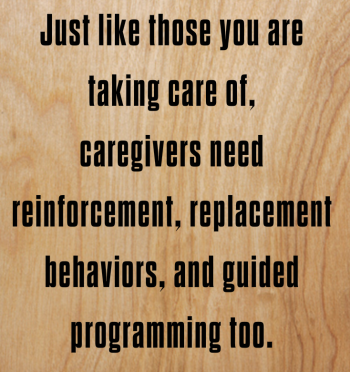
Often caregivers forget or sacrifice self-care. There are many ways to find simple, fast, easy, self-care interventions. If you are able to be a stay at home caregiver or not, when your child is at school (or programming), take time just sit and breathe, even if it is just 2 minutes. Deep, slow, breathes; help calm and center one’s self. Read a book. Talk to a friend about something other than your child or issues. Find an activity that is fulfilling and that is just yours (art, music, yoga, etc…). Get out and be around other adults. Treat yourself to a special thing once and awhile. If you are losing it, or feel on the edge, walk away, breathe, take 30 seconds, and then reengage. Watch your body language to see how intense your state of being is. Let your body guide you in what you need to do. Just like those you are taking care of, caregivers need reinforcement, replacement behaviors, and guided programming too. As clinicians, we leave when the session is over, whereas we know that you have to stay and continue to pace yourself through unexpected and potentially difficult challenges. We understand the immense pressure and stress that is there. Reach out to the professionals that are working with you. It is ok to admit you are struggling, in fact, it will prove to be helpful. Almost every caregiver, of any type, does at one point or another.
At FACT, we customize a program to you and your family’s needs. Reach out to us, and we can try working together to provide the support you need.
That being said, with this blog, if you have any topics, behaviors, questions you want me to write about, please email me at [email protected].